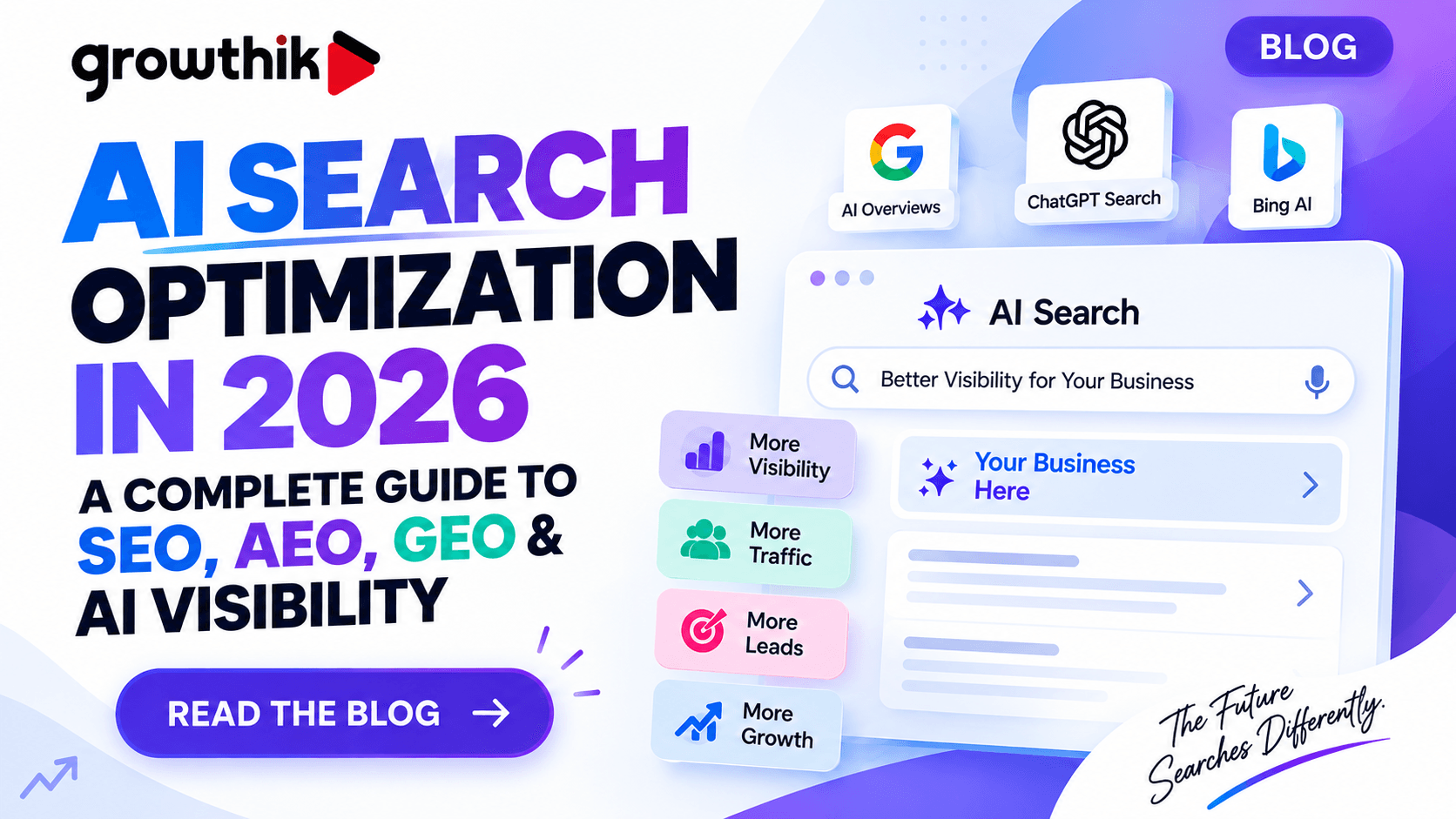
Search has arrived at its most consequential turning point since the inception of Google. In 2026, searchers are no longer merely browsing a list of ten blue links—they are having interactive conversations with artificial intelligence, asking multi-layered questions, and receiving synthesized answers directly in Google AI Overviews, Google AI Mode, ChatGPT Search, Perplexity AI, and Claude.
For business owners, marketing directors, and growth leaders, this transition brings both urgency and immense opportunity. The smart move in 2026 is not to abandon search engine optimization in favor of trendy jargon, but rather to evolve your digital presence. By integrating traditional SEO services with Answer Engine Optimization (AEO) and Generative Engine Optimization (GEO), you ensure that your brand is not only ranked by traditional web crawlers, but also actively cited, recommended, and surfaced by generative AI models.
Key Takeaways for Business Leaders in 2026
- SEO remains the bedrock: AI engines do not invent facts from scratch; they retrieve and synthesize indexable web pages. Without solid technical SEO and indexing, your business is invisible to AI models.
- AEO captures immediate answers: Structuring pages with direct, concise solutions allows AI search engines to pull your answers into zero-click summaries, featured snippets, and voice responses.
- GEO establishes entity authority: Generative engines rely on entity relationships, digital reputation, citations, and original data to decide which companies to recommend in comparative prompts.
- Original insight beats generic volume: Mass-produced generic AI content is filtered out by search algorithms. High information density, verified case studies, and proprietary insights win citations.
- Omnichannel cohesion drives conversion: AI discovery works best when paired with high-performance landing pages, clear commercial pathways, Google Ads, and active conversion tracking.
What Is AI Search Optimization?
AI Search Optimization is the strategic practice of organizing, refining, and technicalizing your website so that both traditional algorithmic search engines and large language model (LLM)-powered answer engines can discover, comprehend, trust, and cite your content.
Historically, SEO focused on keywords, metadata, backlink volume, and crawling bots. While those fundamentals remain crucial, AI search introduces cognitive synthesis. When a prospective client types: "What is the best digital marketing agency in Pune for a B2B SaaS startup with an export focus?", an AI search engine does not simply match strings of text. It parses user intent, evaluates entity authority, checks regional footprint, scans independent reviews, digests technical capability, and crafts an authoritative summary that highlights top recommendations.
If your digital footprint lacks structural clarity, machine-readable schema markup, or contextual proof of real-world expertise, AI search engines will bypass your brand and recommend your competitors instead.
Deconstructing the Acronyms: SEO vs AEO vs GEO vs AI SEO
Marketing teams are inundated with new terminology. To make effective business investments, it is critical to understand how these concepts relate to one another and why they must operate as an interconnected system rather than isolated tactics:
| Acronym | Full Meaning | Primary Objective | Core Optimization Focus |
|---|---|---|---|
| SEO | Search Engine Optimization | Rank on Search Engine Result Pages (SERPs) | Crawlability, technical health, keywords, backlinks, and user engagement signals. |
| AEO | Answer Engine Optimization | Direct inclusion in conversational Q&A responses | Direct definitions, FAQ structures, schema markup, and snippet-ready answers. |
| GEO | Generative Engine Optimization | Citation and recommendation in multi-source AI summaries | Entity authority, co-citations, brand sentiment, statistical depth, and topical clustering. |
| AI SEO | AI-Assisted Search Discovery | Comprehensive multi-platform organic search dominance | The unified synthesis of SEO, AEO, and GEO supported by full-funnel digital marketing. |
Treating these frameworks as rivals is a fundamental mistake. AEO provides the crisp, direct answers that AI models extract. GEO provides the conceptual depth, contextual authority, and trust signals that convince models your website is worth citing. And traditional SEO ensures the technical foundation, crawl architecture, and speed necessary for machines to access your site in the first place.
How Google AI Overviews and Modern AI Engines Work
To optimize for AI engines, we must understand the mechanical process behind their answer generation. Systems like Google AI Overviews, Perplexity AI, and SearchGPT do not simply query their offline training weights when handling live queries. Instead, they rely on Retrieval-Augmented Generation (RAG) and query fan-out.
1. Retrieval-Augmented Generation (RAG)
When a user enters a prompt, the engine searches its live index of web pages to gather fresh, authoritative reference documents. It extracts relevant passages, compares data points across multiple top-ranking sources, and feeds those retrieved passages into an LLM context window to generate a synthesized response with attributed citations. If your webpage cannot be retrieved rapidly or is difficult to parse semantically, it will never enter the RAG pipeline.
2. Query Fan-Out
Sophisticated AI engines do not search for just one query. For example, if someone asks: "How to scale a direct-to-consumer skincare brand with Meta Ads in India?", the AI engine may internally decompose that single query into four distinct sub-searches:
- "D2C skincare average customer acquisition cost India"
- "Best Meta Ads creative formats for cosmetic brands"
- "Indian skincare conversion rate benchmarks"
- "Top performance marketing agencies specializing in Indian D2C"
The engine then gathers the most authoritative sources across all four sub-queries to construct a comprehensive response. This means that topical depth across an entire cluster of articles—not just an isolated keyword-stuffed page—is essential for capturing modern search traffic.
The 4 Foundational Pillars of AI Search Optimization
To build a resilient organic acquisition engine that dominates both traditional search and AI discovery, focus your resources on these four core pillars:
Pillar 1: Technical SEO & Crawl Architecture
AI engines rely on automated crawlers such as Googlebot, GPTBot, PerplexityBot, and ClaudeBot. If your technical architecture contains render-blocking bottlenecks, broken redirect loops, or excessive JavaScript payloads, these crawlers will either truncate your content or abandon your pages entirely.
- Server-Side Rendering (SSR) & Static Generation: Modern frameworks like Next.js ensure that crawlers receive pre-rendered HTML immediately upon request, eliminating crawler rendering delays. Explore our Next.js website development services to learn how modern architectures elevate page crawlability.
- Rigorous Technical Auditing: Review robots.txt directives, canonical tag precision, XML sitemaps, and HTTP status codes regularly. Follow our comprehensive technical SEO audit checklist to eliminate crawl friction.
- Core Web Vitals & Page Experience: Ensure Largest Contentful Paint (LCP) occurs under 2.5 seconds, visual stability (CLS) remains near zero, and interaction responsiveness (INP) is instantaneous. See our deep-dive on Core Web Vitals optimization for detailed benchmarks.
Pillar 2: Answer Engine Optimization (AEO) & Question Architecture
Conversational queries represent the fastest-growing segment of global search volume. People query AI tools as if speaking to a senior consultant. AEO ensures your website speaks directly to these conversational patterns.
Structure your articles using the Inverted Pyramid Principle:
- The Direct Answer (First 40–60 words): Begin each core section with a standalone, declarative summary that directly answers the heading query. This gives AI scrapers a clean passage to quote.
- The Strategic Nuance & Elaboration: Follow the immediate answer with comparative analysis, practical considerations, and step-by-step guidance.
- The Tactical Application & Case Context: Conclude with real-world examples, actionable checklists, and next steps for the reader.
By structuring content in this manner, your pages become natural candidates for AI featured blocks, voice answers, and citation links.
Pillar 3: Generative Engine Optimization (GEO) & Entity Authority
LLMs do not evaluate words in isolation; they map relationships between entities (people, organizations, locations, concepts, and products). To build entity authority in generative search:
- Consistent Brand Footprint: Maintain identical company names, executive bios, registered addresses, and service descriptions across your official website, LinkedIn, Google Business Profile, Crunchbase, and industry directories.
- Original Research & Proprietary Benchmarks: AI models strongly favor primary data sources. Publishing original survey findings, proprietary campaign data, and unique industry metrics turns your site into a primary citation anchor for other writers and LLMs.
- Contextual Internal Linking: Seamlessly link informational guides to commercial capabilities. For instance, connecting this AI search pillar with specialized solutions like content marketing, lead generation, and local SEO services demonstrates semantic topical depth to search algorithms.
Pillar 4: Structured Data & Schema Markup
Schema markup is the universal digital dialect through which websites communicate directly with search algorithms. While schema does not guarantee a rich snippet, it eliminates ambiguity regarding page intent, authorship, and organizational credentials.
Essential schema types for every high-authority business website include:
OrganizationandLocalBusinessschema establishing registered entities, official logos, contact endpoints, and social channels.ArticleandBlogPostingschema explicitly defining authors, publication dates, and headline metadata.FAQPageschema translating core question-and-answer pairs into machine-readable JSON-LD.BreadcrumbListschema mapping precise navigational hierarchy.ServiceandProductschema detailing specific commercial offerings and geographic coverage.
Industry-Specific AI Search Execution Strategies
Optimizing for AI search varies depending on your business model and target audience. Here is how different sectors should prioritize their implementation:
1. Local Service Businesses in Pune and Tier-1 Indian Cities
When local consumers ask AI engines: "Who is the most reliable corporate web design company in Pune near Baner or Kharadi?", models cross-reference map listings, customer sentiment, local citations, and website content.
Local businesses must ensure their Google Business Profile is thoroughly populated with authentic photography, verified operating hours, and active customer reviews. Complement this with dedicated localized landing pages, clear area references, and high-performance engineering. Explore our specialized local SEO solutions in Pune and our guide to dominating local map packs in 2026.
2. B2B Enterprises & High-Ticket Service Providers
B2B buyers conduct extensive multi-session research before contacting sales. AI search engines assist these decision-makers by summarizing feature comparisons, pricing structures, and vendor reputations.
To capture B2B interest, build detailed comparison resources, objective teardowns, implementation guides, and transparent case studies. Connect this informational authority with strategic performance marketing and B2B content marketing frameworks to nurture prospects through complex sales pipelines.
3. High-Growth Startups & Direct-to-Consumer Brands
Startups must compete against legacy brands with decades of backlink accumulation. AI search levels the playing field because generative engines prioritize answer relevance, freshness, and high information density over raw domain age.
Combine aggressive organic content publishing with targeted Meta Ads and Google Ads management to build immediate brand search volume, which acts as a powerful entity confirmation signal for generative algorithms.
How to Measure AI Search Visibility in 2026
Tracking AI search performance requires looking beyond traditional single-keyword rank trackers. Because AI answers are dynamic and personalized to each user session, modern measurement requires a multi-dimensional analytics approach:
- Google Search Console Generative AI Filtering: Utilize Search Console performance dashboards to monitor query impressions originating from AI Overviews and AI Mode summaries. Watch for shifts in click-through rates on high-intent informational queries.
- AI Referral Traffic Auditing in GA4: Track incoming referral sessions from conversational AI domains such as
chatgpt.com,perplexity.ai,claude.ai, andcopilot.microsoft.com. Monitor engaged session durations and goal completion rates from these highly qualified visitors. - Brand Query Velocity: As your brand is cited more frequently in AI answers, direct navigational searches (people searching for your company name or founders on Google) will increase. A rising branded search curve is one of the strongest indicators of expanding AI visibility.
- Share of Model (SoM) Monitoring: Periodically run standardized industry prompts across ChatGPT, Perplexity, and Gemini to record whether your brand, executives, or core case studies appear in the generated recommendations.
The 10-Point AI Search Readiness Checklist for 2026
Use this tactical checklist to audit your website and identify immediate optimization priorities:
- Crawl Accessibility: Verify that robots.txt does not inadvertently block AI crawlers (Googlebot, GPTBot, PerplexityBot) from accessing public articles and service pages.
- Pre-Rendered HTML: Ensure core body text and headings are present in the initial server response rather than injected exclusively via client-side JavaScript.
- Direct Answer Architecture: Include a clear 40–60 word answer immediately beneath each primary question heading.
- Verified Schema Markup:Validate Article, BreadcrumbList, Organization, and FAQPage schemas using Google's Rich Results Test.
- Information Density: Replace vague fluff with concrete metrics, original case studies, comparative tables, and practical workflows.
- Entity Consistency: Verify that company name, phone, address, and core offerings match identically across all public web directories and social channels.
- Mobile Performance: Maintain Core Web Vitals scores in the green band (LCP under 2.5s, INP under 200ms, CLS under 0.1).
- Contextual Link Flow: Connect informational guides to corresponding commercial solutions such as website design, custom web development, and organic search services.
- Content Freshness: Regularly update key statistics, industry examples, and pricing guidelines to prevent models from viewing your content as stale.
- Conversion Architecture: Ensure every informative guide features prominent, friction-free calls-to-action that guide visitors into consultation or audit funnels.
Common AI SEO Mistakes to Avoid
As brands rush to capture AI visibility, many fall into common traps that harm their long-term digital standing:
- Publishing Automated AI Slop: Flooding a domain with thousands of unedited AI-written articles lacks originality and triggers algorithmic quality devaluations.
- Chasing Buzzwords While Neglecting Technical Health: No amount of prompt optimization will compensate for a website plagued by 404 errors, slow loading times, or unindexed pages.
- Inventing False Metrics or Fictitious Case Studies: Modern search engines cross-reference claims against extensive knowledge graphs; unverified assertions undermine domain trust.
- Treating AI Optimization as a One-Time Fix: AI models and search algorithms evolve continuously. Sustained visibility requires ongoing content refinement, technical maintenance, and proactive performance tracking.
Partner with Growthik Media to Build Your 2026 AI Search Engine
Navigating the shift from traditional search to conversational, AI-driven discovery requires a marketing partner that understands modern web architecture, technical search engineering, and conversion-focused storytelling.
At Growthik Media, we engineer complete digital growth systems for high-performing Indian enterprises and ambitious startups. From comprehensive SEO campaigns and custom web development to multi-channel performance marketing, we ensure your brand captures market demand wherever your customers are searching.
Ready to assess your website's visibility in Google AI Overviews, SearchGPT, and modern search engines?
Claim Your Free Technical SEO & AI Visibility Audit
Let our senior search strategists evaluate your website architecture, schema implementation, entity footprint, and topical authority. Receive an actionable roadmap tailored to your growth goals.