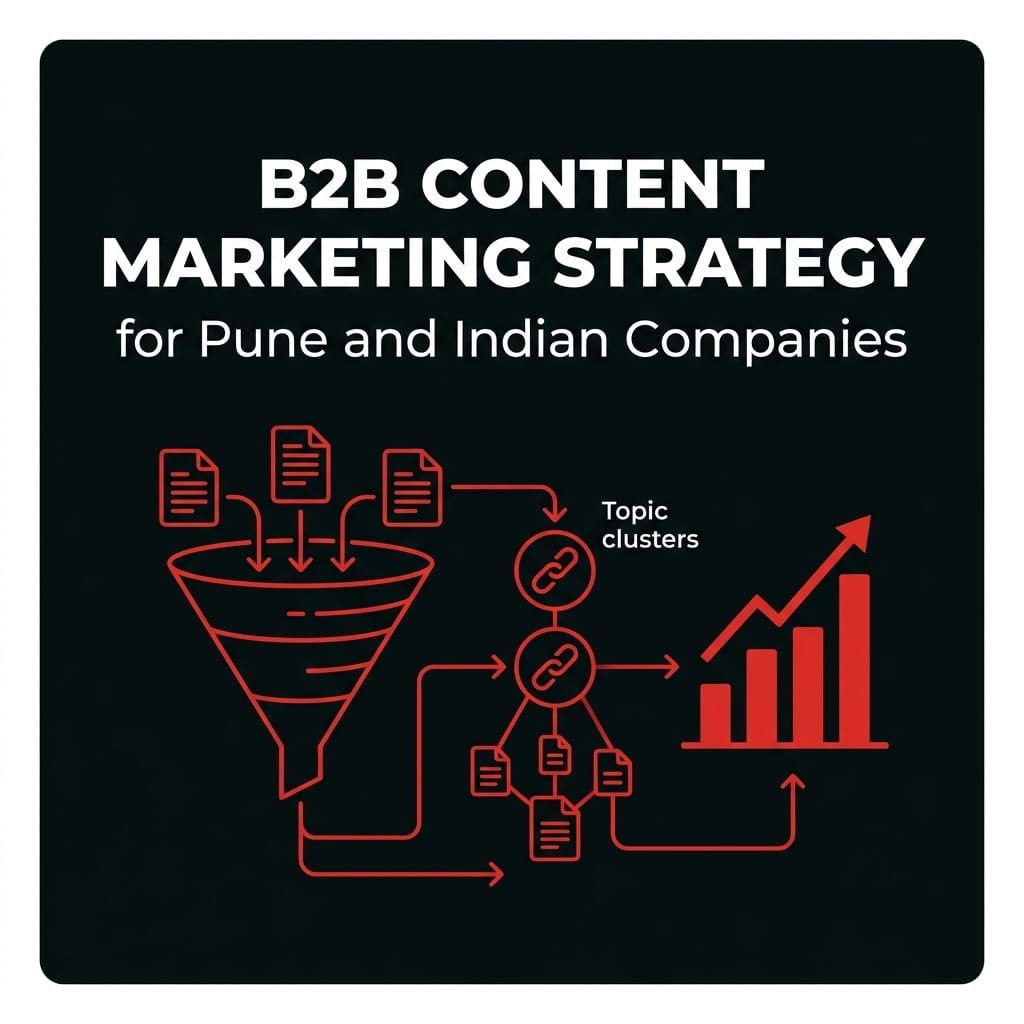
Most Indian B2B companies copy Western content marketing playbooks and then wonder why their blog gets zero traffic. Pune B2B buyers are practical, referral-aware and ROI-focused. Here is a content marketing strategy built for Indian buying cycles, local trust and sales conversations.
For teams planning future-facing content, this B2B strategy pairs well with our AI search optimization guide, especially the sections on content clarity, topical authority and measuring AI visibility.
How Pune and Indian B2B Buyers Are Different
Understanding the Indian B2B purchase journey is the foundation of any effective content strategy:
- Decision cycles are longer - often 3–6 months for mid-market deals
- Multiple stakeholders (committee buying is more common than in the West)
- Price sensitivity is high - ROI and cost justification content performs well
- WhatsApp is a legitimate professional communication channel
- LinkedIn adoption is growing rapidly in tier-1 Indian cities
- Vernacular content (Hindi, Marathi) is increasingly effective in regional markets
What Content Actually Works in Indian B2B
1. ROI-Focused Case Studies
Indian buyers want hard numbers. Vague "results" don't convert. Write case studies with specific metrics: "We reduced client's customer acquisition cost from ₹2,400 to ₹680 in 4 months."
2. Comparison Guides
Indian decision-makers do extensive research before committing. Content that helps them compare options (your solution vs alternatives) gets high search volume and builds trust.
3. How-to Guides for Compliance and Regulation
GST compliance, SEBI regulations, labor law updates - content addressing India-specific regulatory challenges attracts highly qualified the B2B decision-makers.
The Indian B2B buyer wants to see that you understand their specific context - regulatory environment, budget constraints, team structure. Generic Western-style thought leadership falls flat.
Content Distribution in India
- LinkedIn: B2B decision-makers in India are most active 8–10am and 5–7pm on weekdays
- WhatsApp Business: Share content summaries with warm prospects (not cold blasts)
- Email newsletters: Personalized, low-volume, high-value content sequences
- YouTube: Hindi-language explainer videos for mid-market companies